INDUCTION PROJECT: ‘The Red Thread’
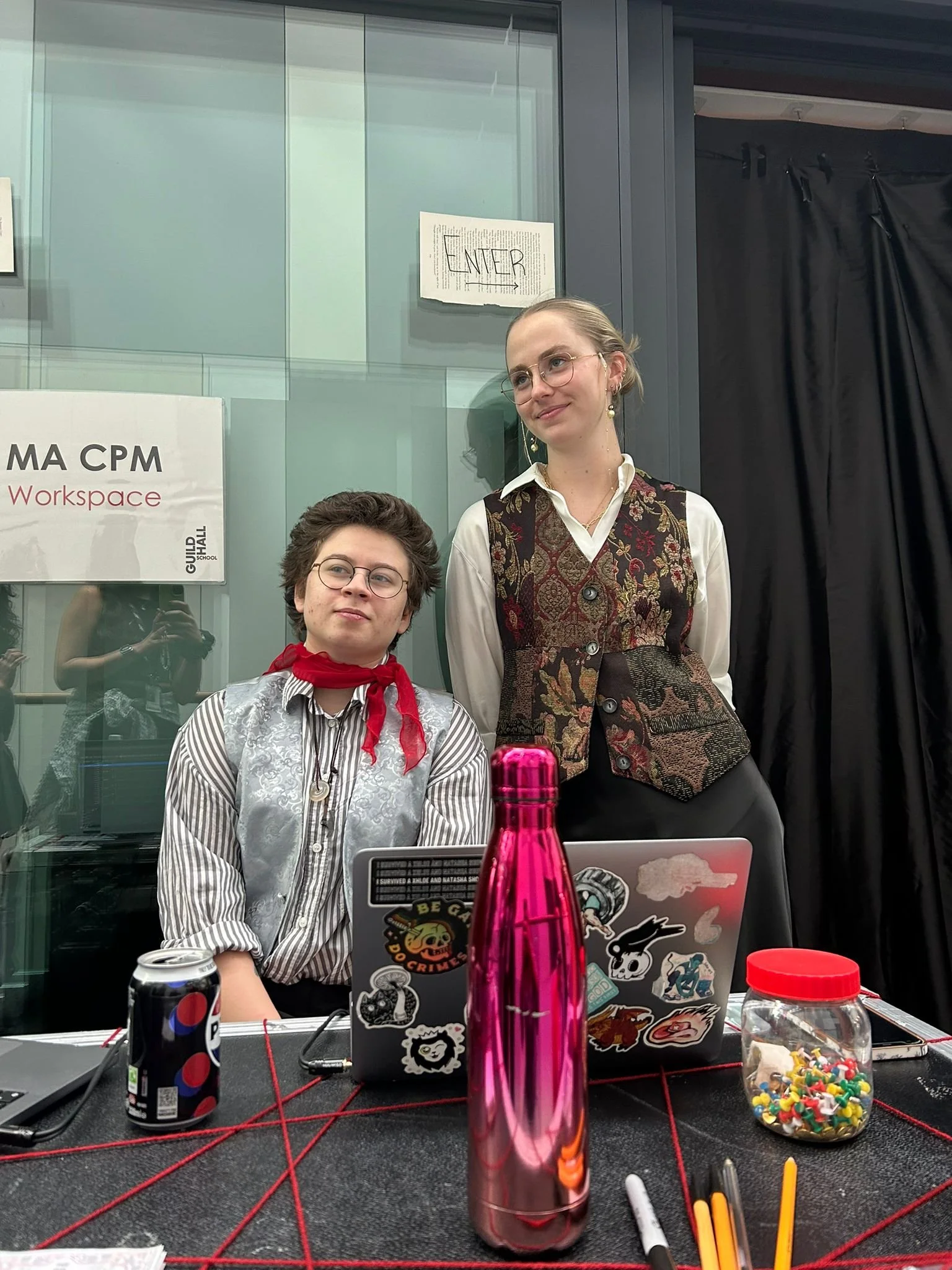
Performed at: MACPM Room, Lvl 4 of the Milton Court building
September - October Twenty-Twenty-Five (2025)
Team Credits:
Production Management: Callum Sked | Keira Thompson Taitt
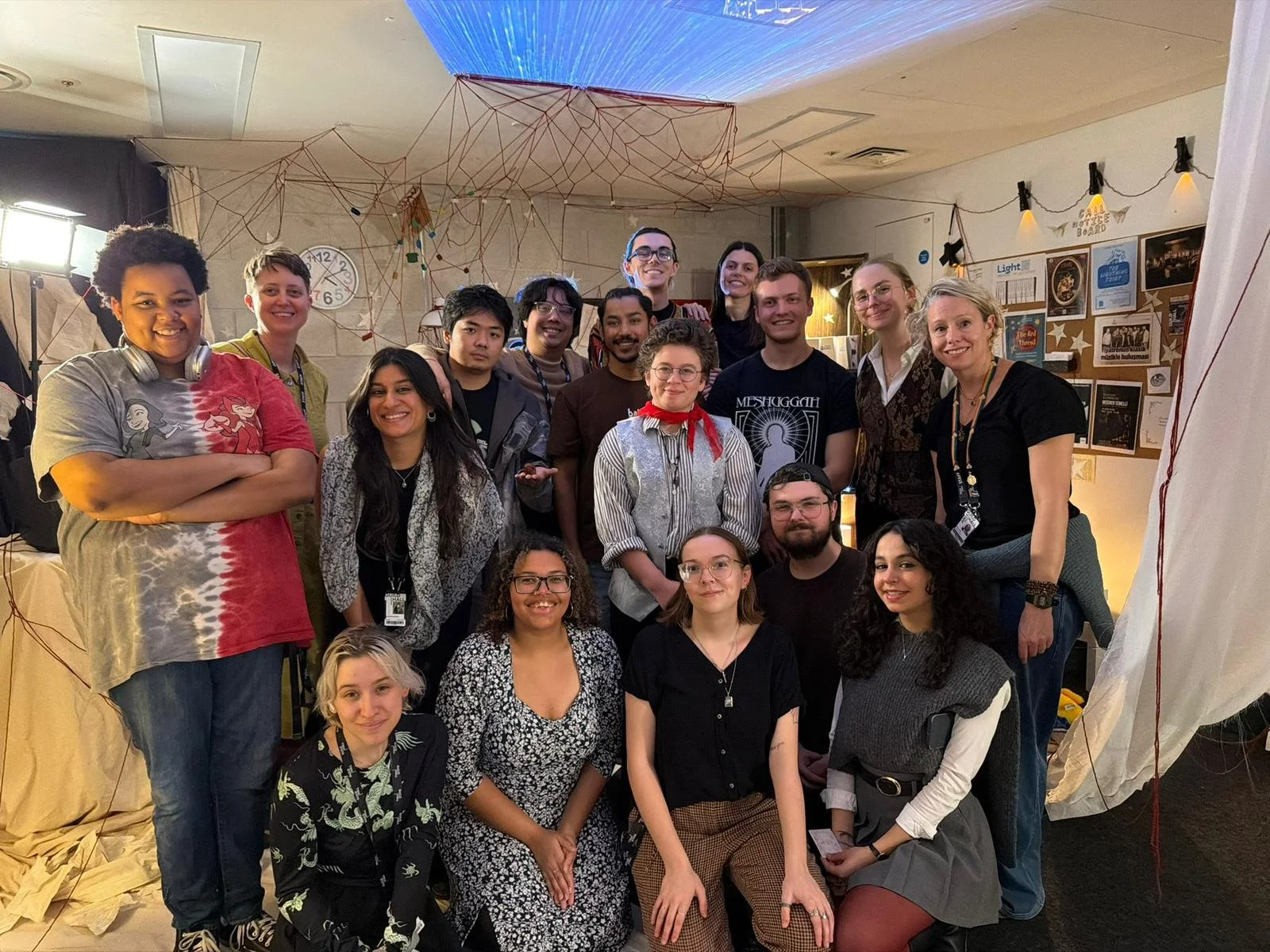
Curation, Marketing and Artistic Direction: Corgil Chernova | Tara Choudhary | Praise Titus | Christine Zak
Lighting: Conor Costelloe | Rijan Kc
Sound: Conor Costelloe | Elif Özkara | EJ Walker
Video: Krystal Anderson | Elif Özkara | Saran Polchan
Set: Nalan Asya Asenova | Hal Munger | Tiger He
Props: Krystal Anderson | Nalan Asya Asenova | Corgil Chernova | Allissa Flood
Live performance: Allissa Flood | EJ Walker | Christine Zak
Voice Work: Krystal Anderson | Nalan Asya Asenova | Tara Choudhary | Corgil Chernova | Conor Costelloe | Rijan Kc | Hal Munger | Elif Özkara | Callum Sked | Keira Thompson Taitt | Praise Titus | EJ Walker | Christine Zak
Module Leads: Sophie Hope | Emily Orley
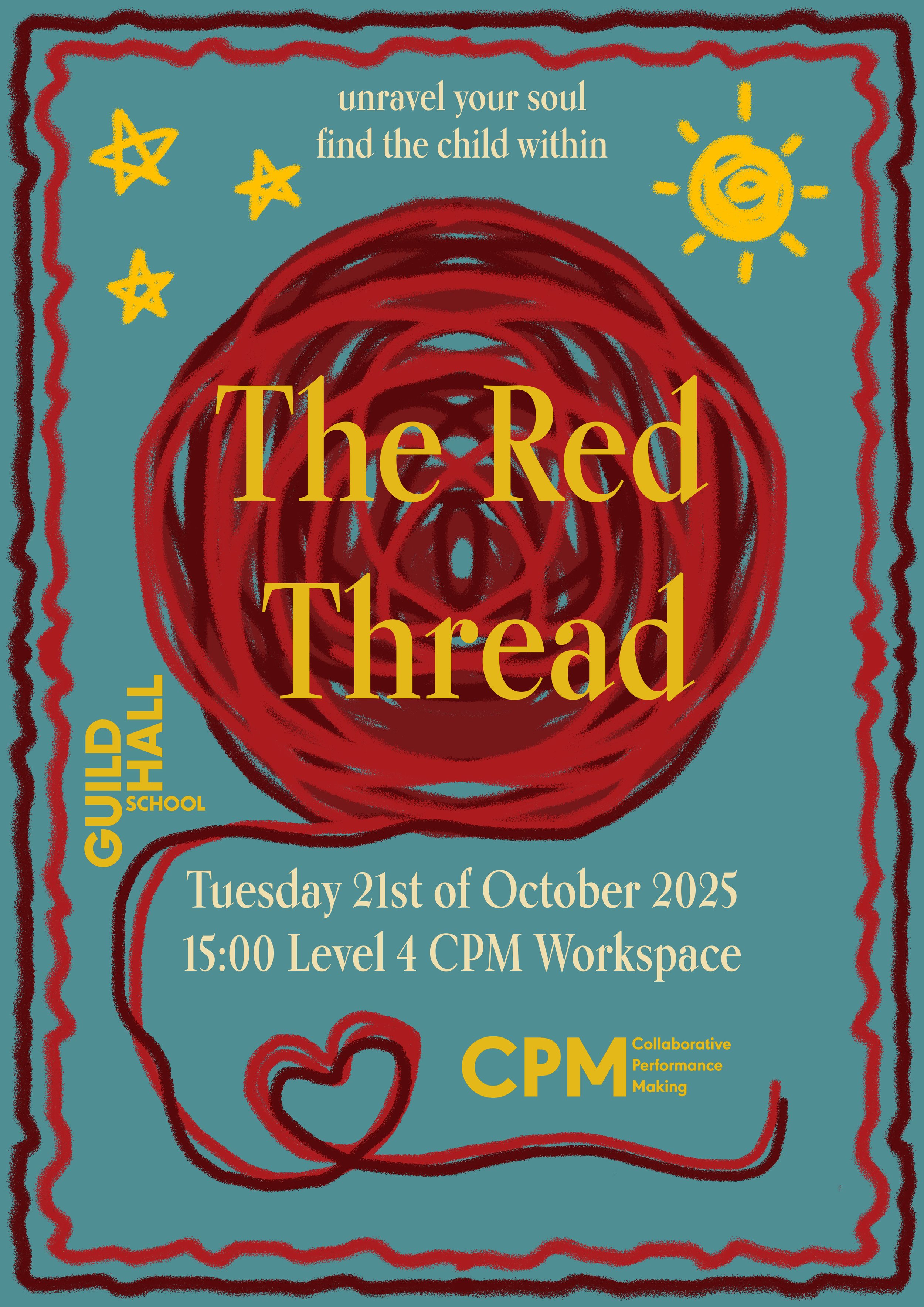
Poster design: Corgil Chernova
A song I associate with this project:
‘The Answer’ - Dodie
EJ’s summary of the project:
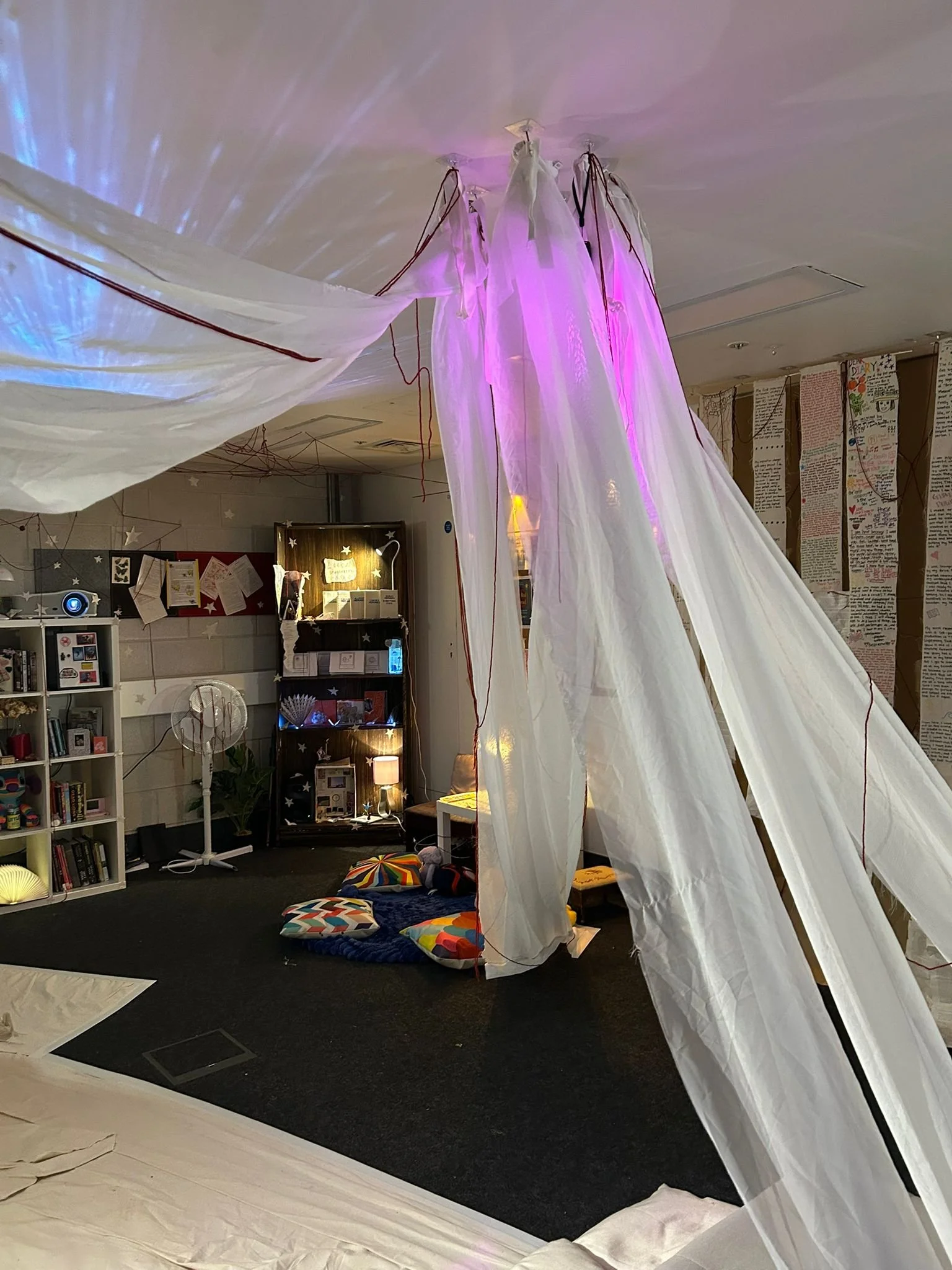
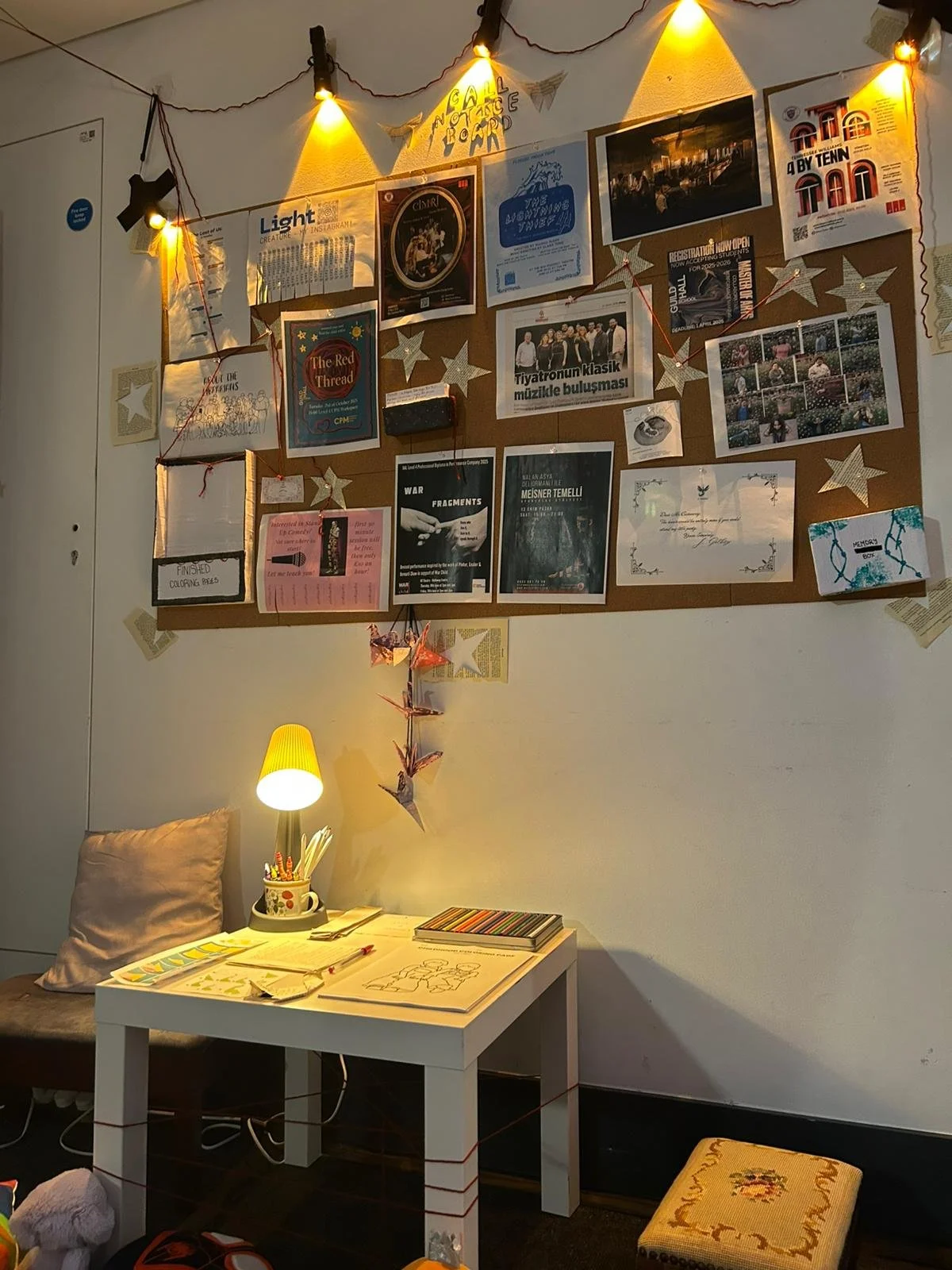
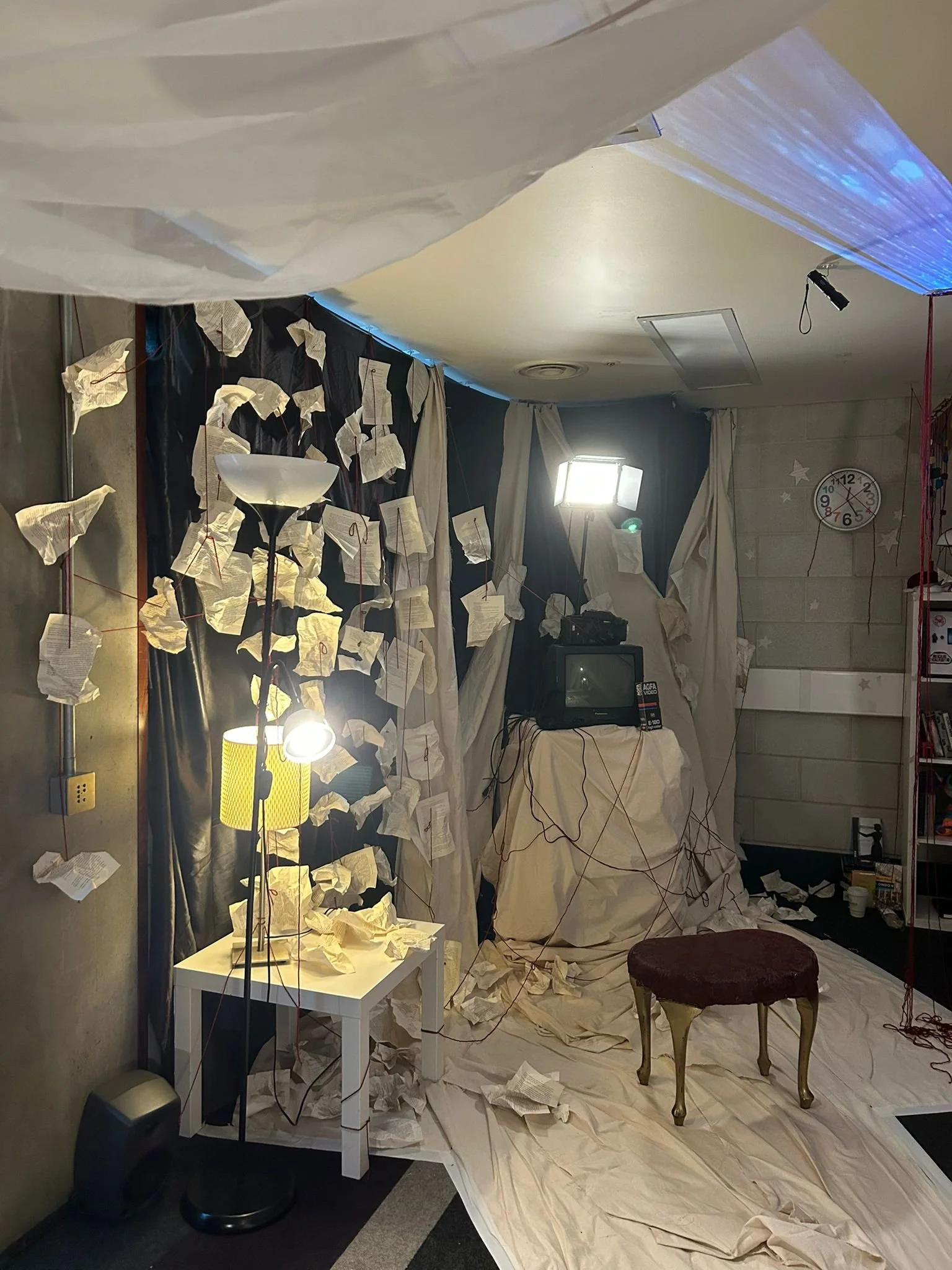
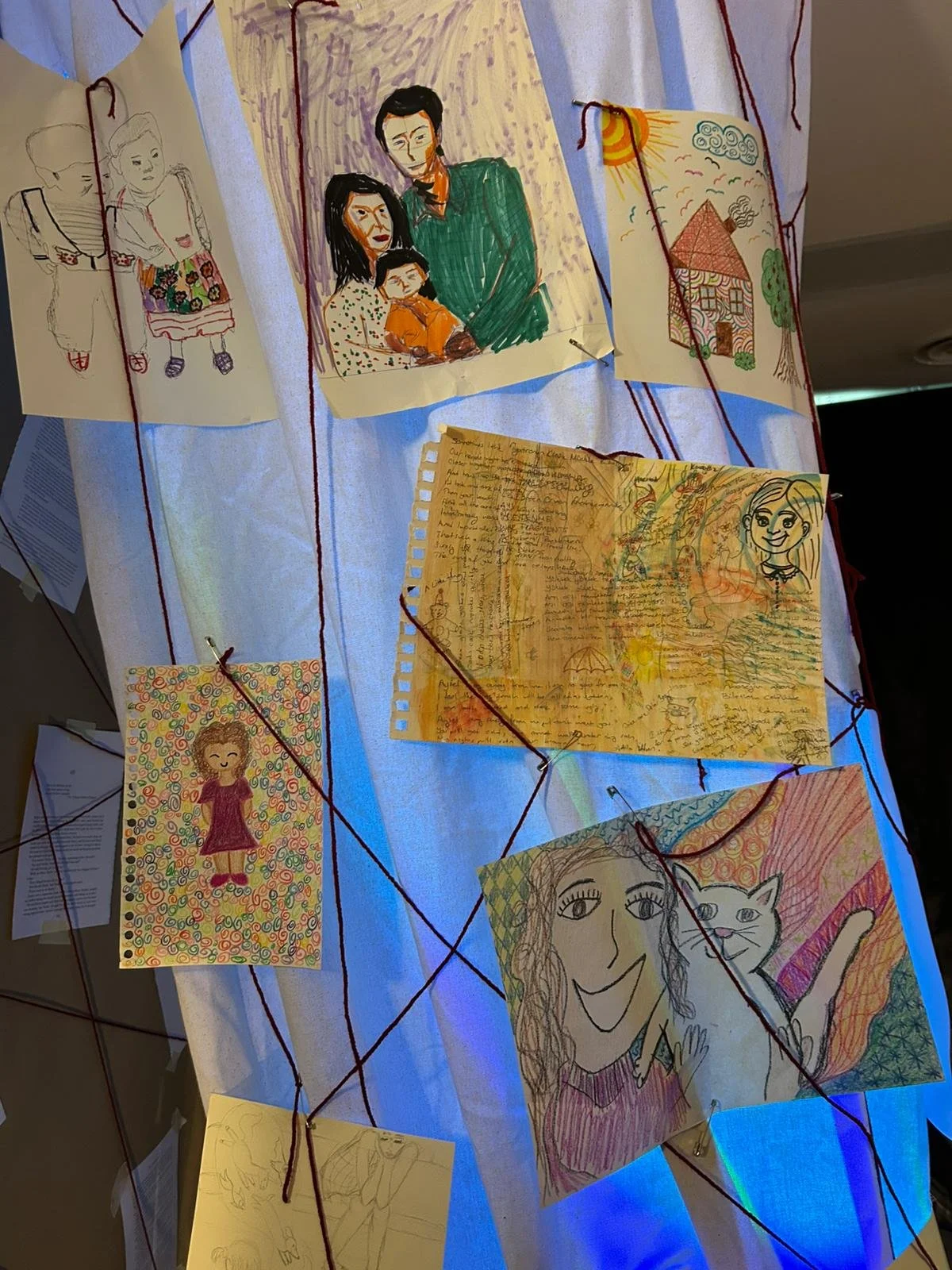
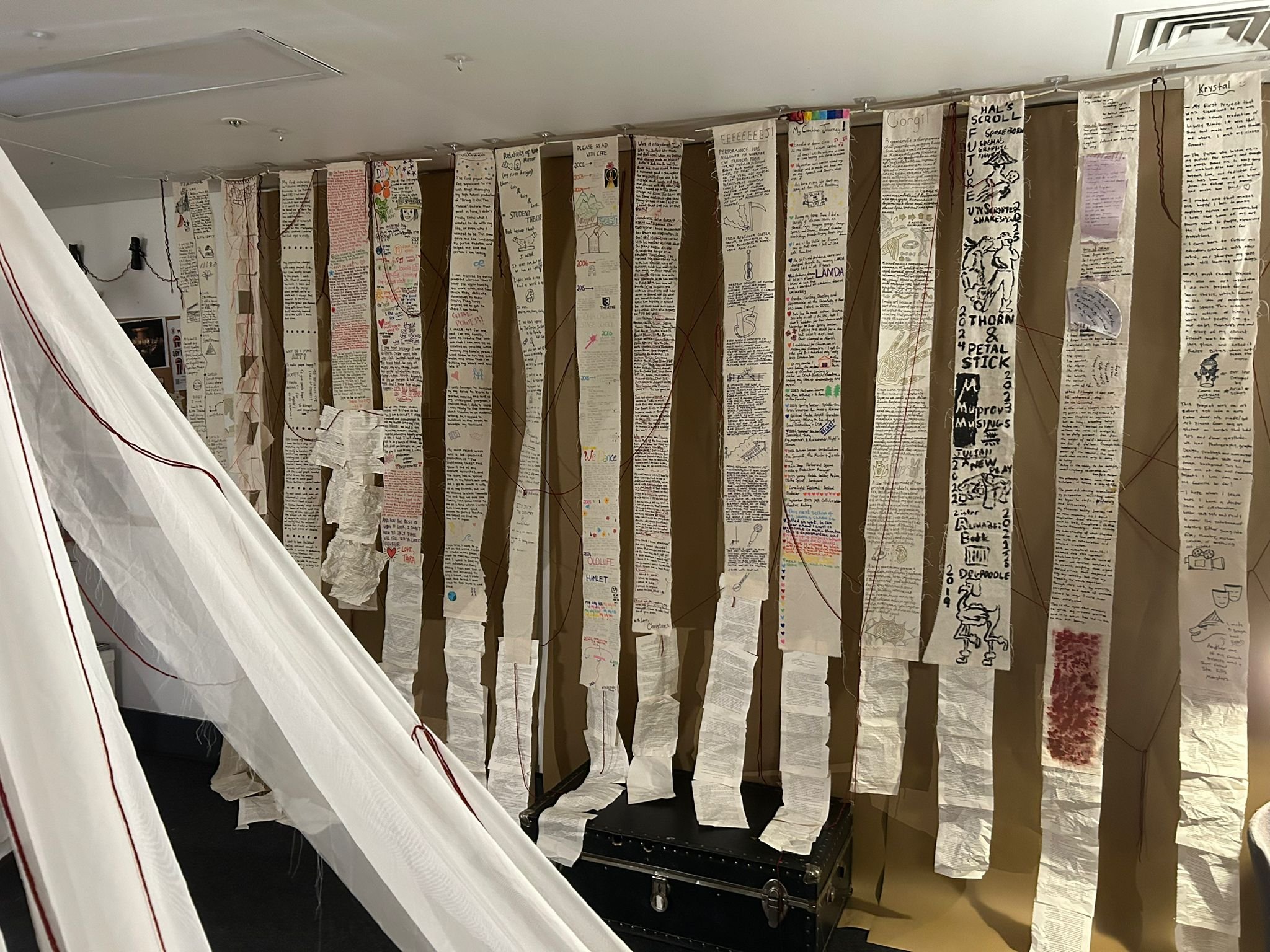
‘An installation we created via transforming our small common area and main study space. Named ‘The Red Thread’ after the concept of Red Strings of Fate and Love, this installation took the form of a library, archiving our memories, artistic journeys, ambitions, and what lead us to this course, and collaborating together.’
What did EJ contribute to this project?
Roles: Sound Designer, Composer, PSE, Performer (Main Librarian)
Development
Planning for Sound
Account from Initial Design Meeting Minutes, taken by Keira Thompson Taitt:
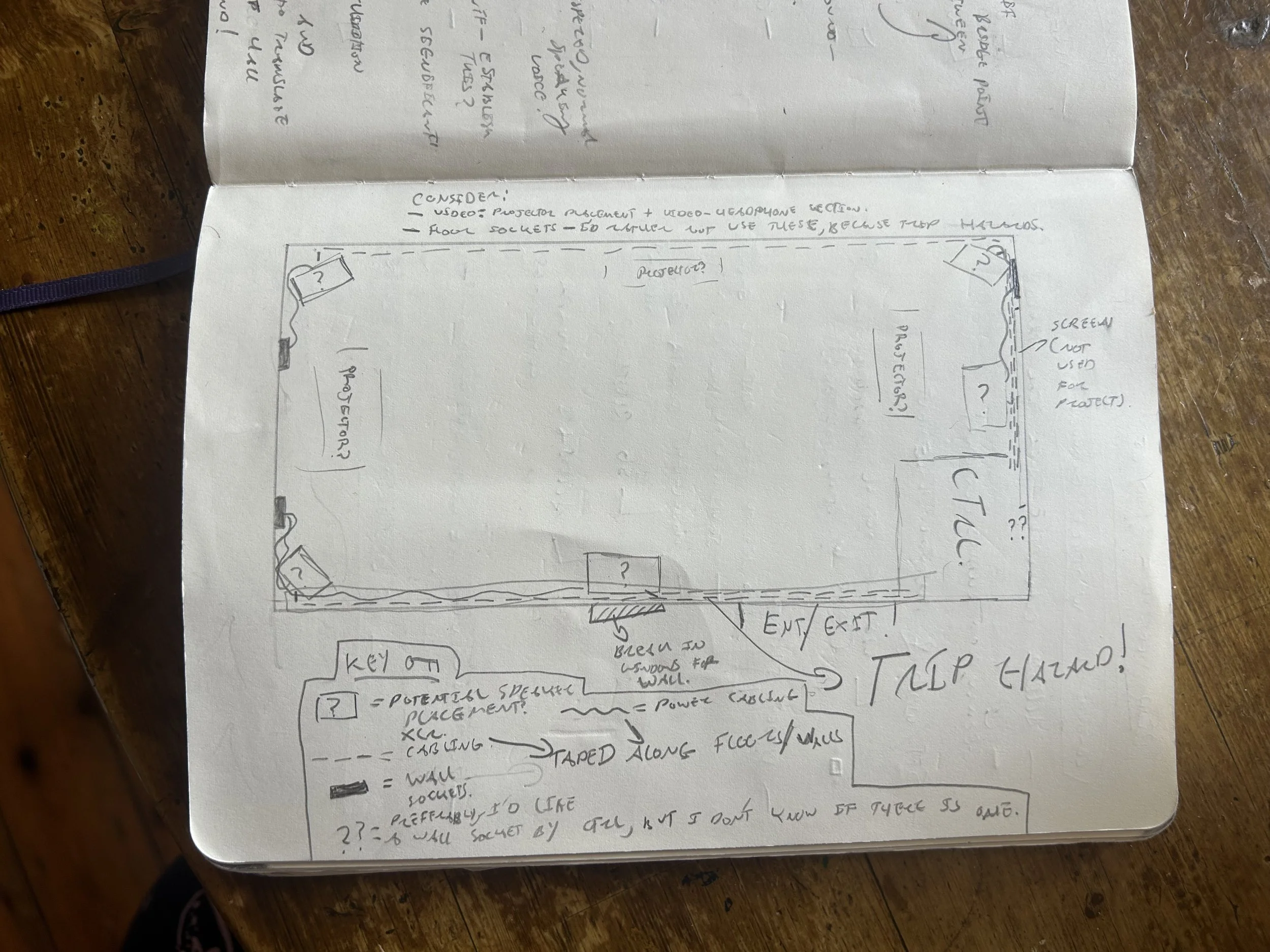
Speaker Plans
Version 1 - Vectorworks has NOTHING on me!
Version 2 - A somewhat more polished plan, but not really:
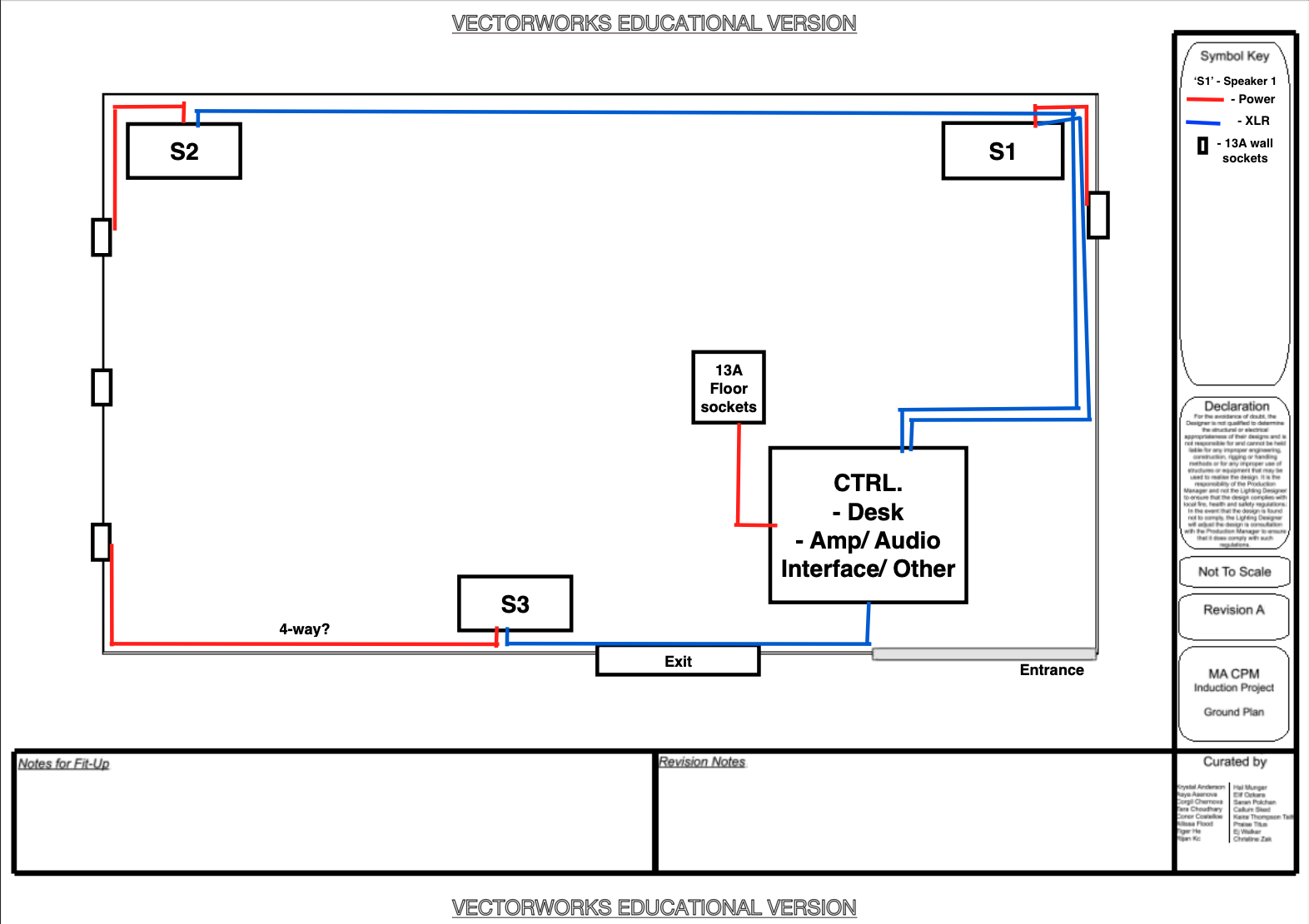
As you can see, I clarified my plan, reducing my speaker count to three and carefully considering where cables and speakers would be placed in relation to the rest of the room. This is still not ideal, as cables would cross walkways, but this became unavoidable, and we had to make do with it and the safety measures we had at our disposal.
This is an older version, in which we thought control would be inside the room. This was scrapped. With this change also came a rethinking of the use of floor sockets. We ended up running this power cable to an extension cord near Speaker One (1).
Voice work I sourced from cohort members:
A sustained hum of one note - for the room’s soundscape;
A line/ verse/ saying that resonates with each person - for the room’s soundscape;
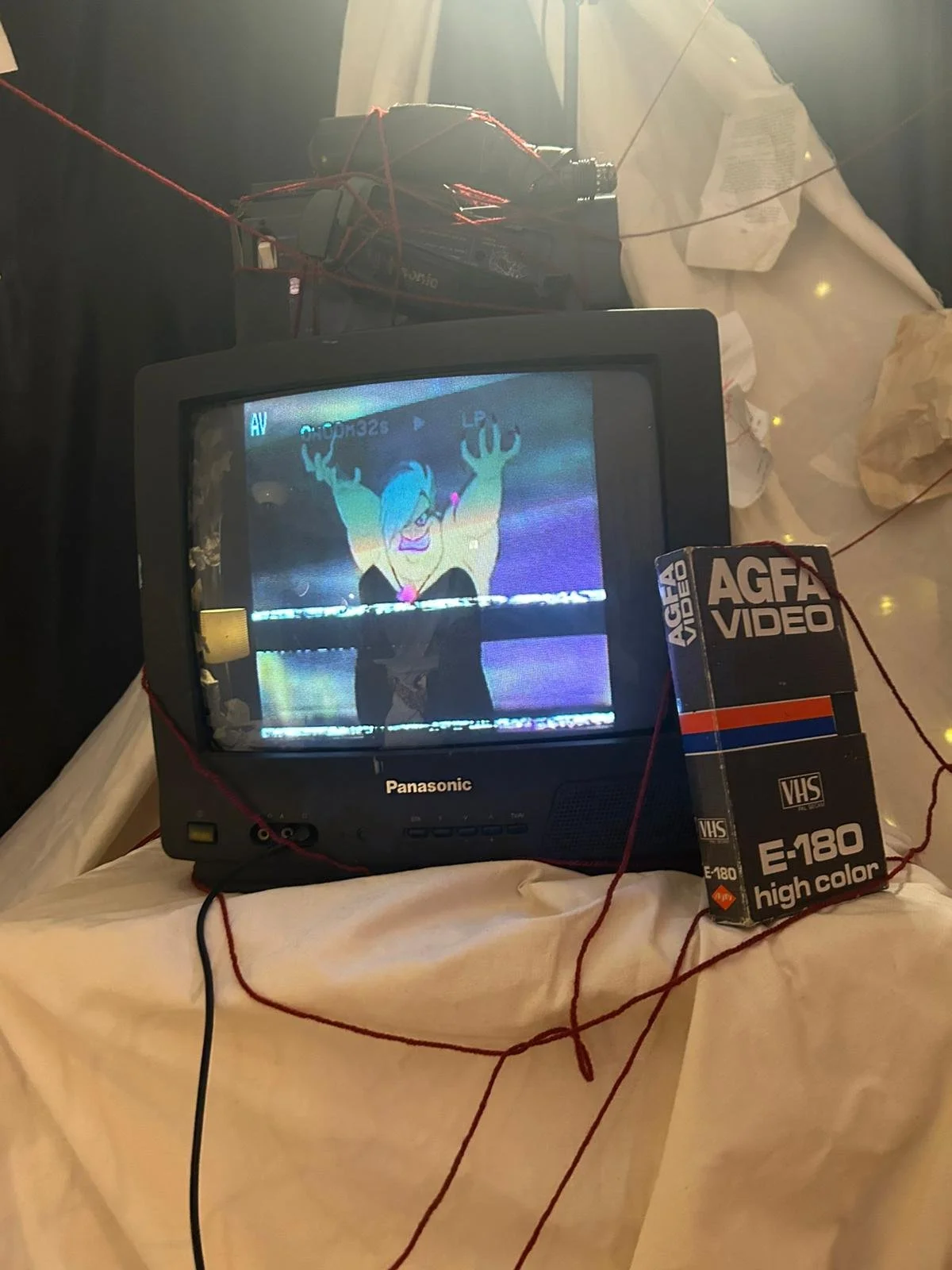
Ramble-y voice notes taken as people walk/ travel to class - for the Video Team’s TV display;
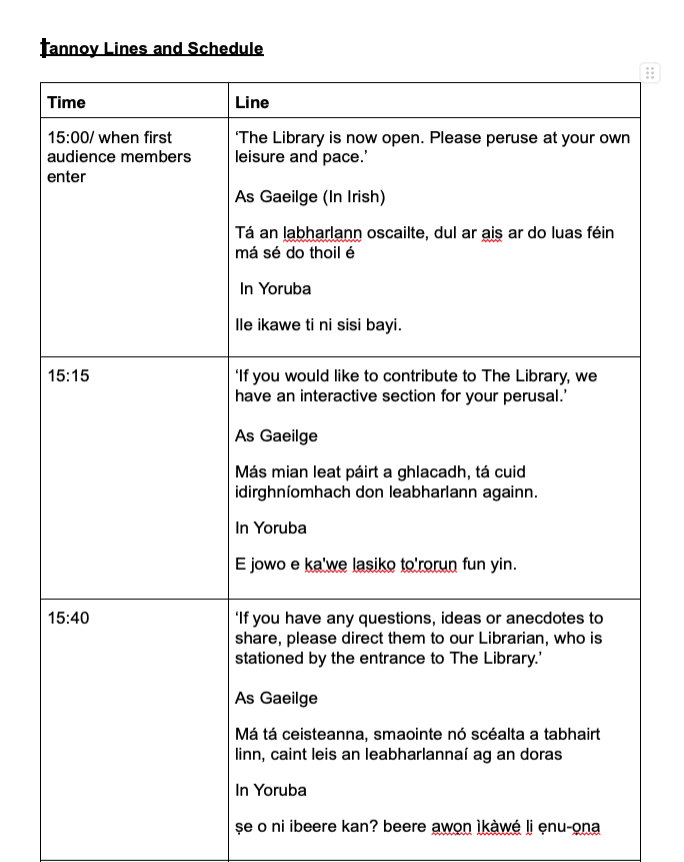
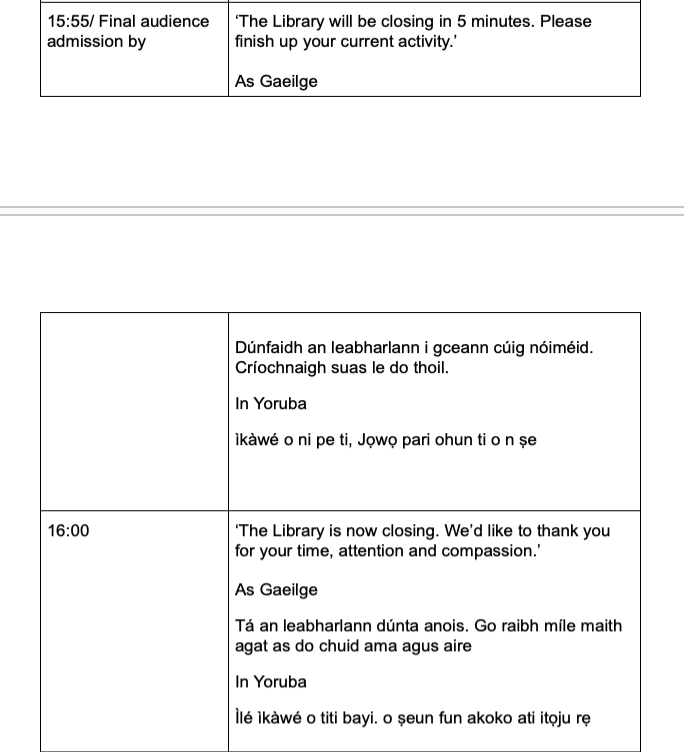
Certain people volunteered to read out some tannoy lines I scheduled into the performance in their home languages - for the room’s soundscape:
Sound Sourcing
Tannoy script (Praise filled the table out with translations in Yoruba and Gaeilge, as well):
Putting It All Together!
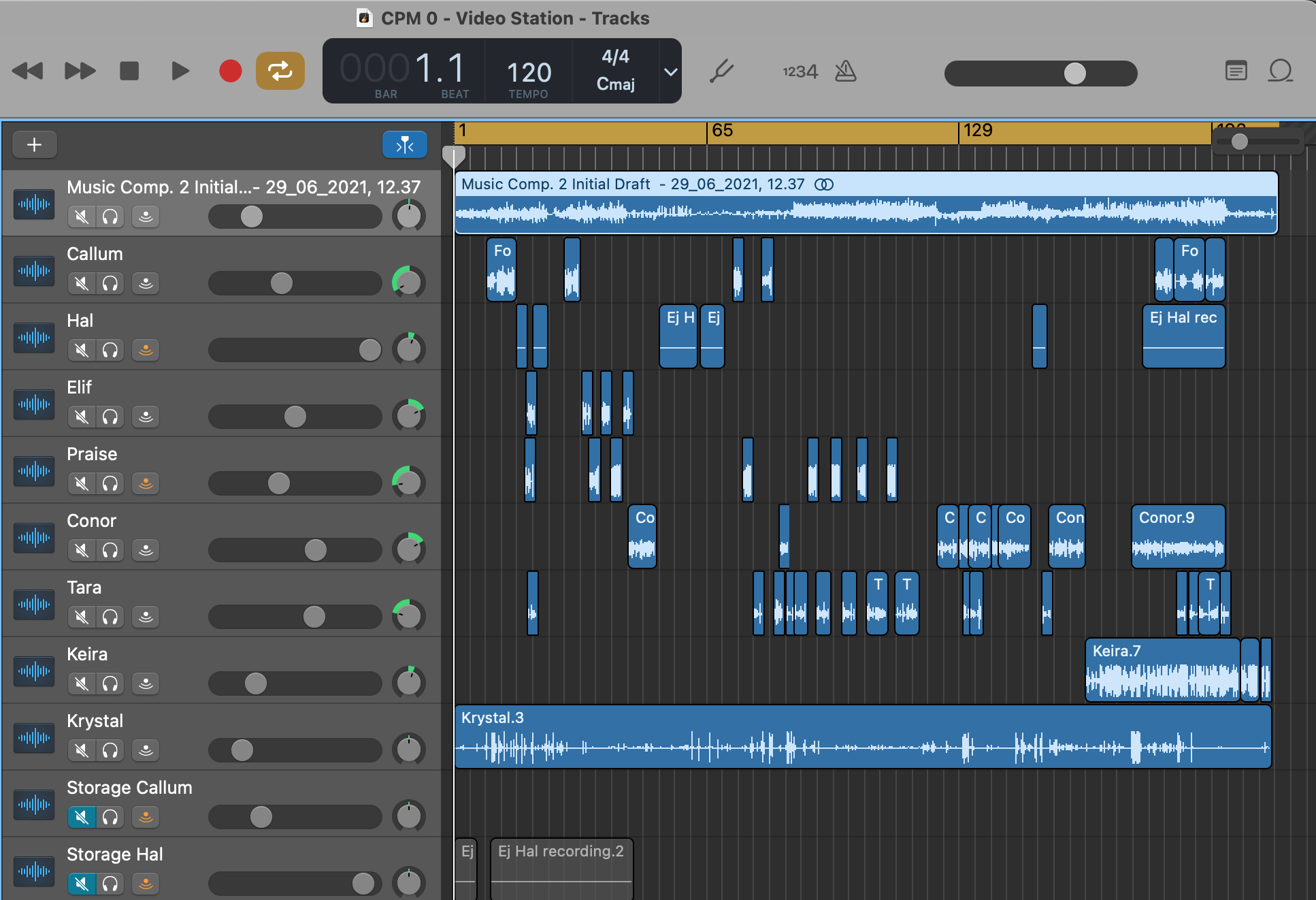
Garageband:
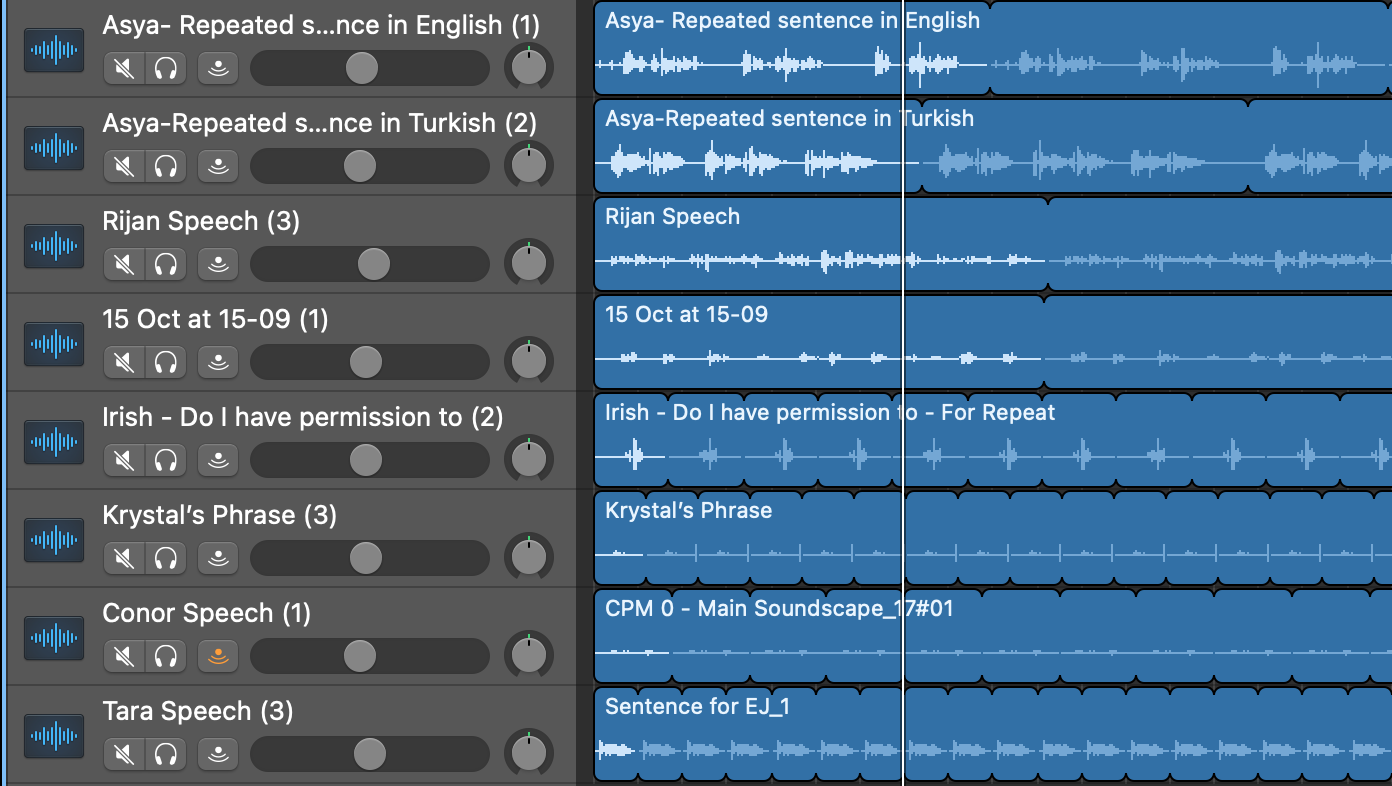
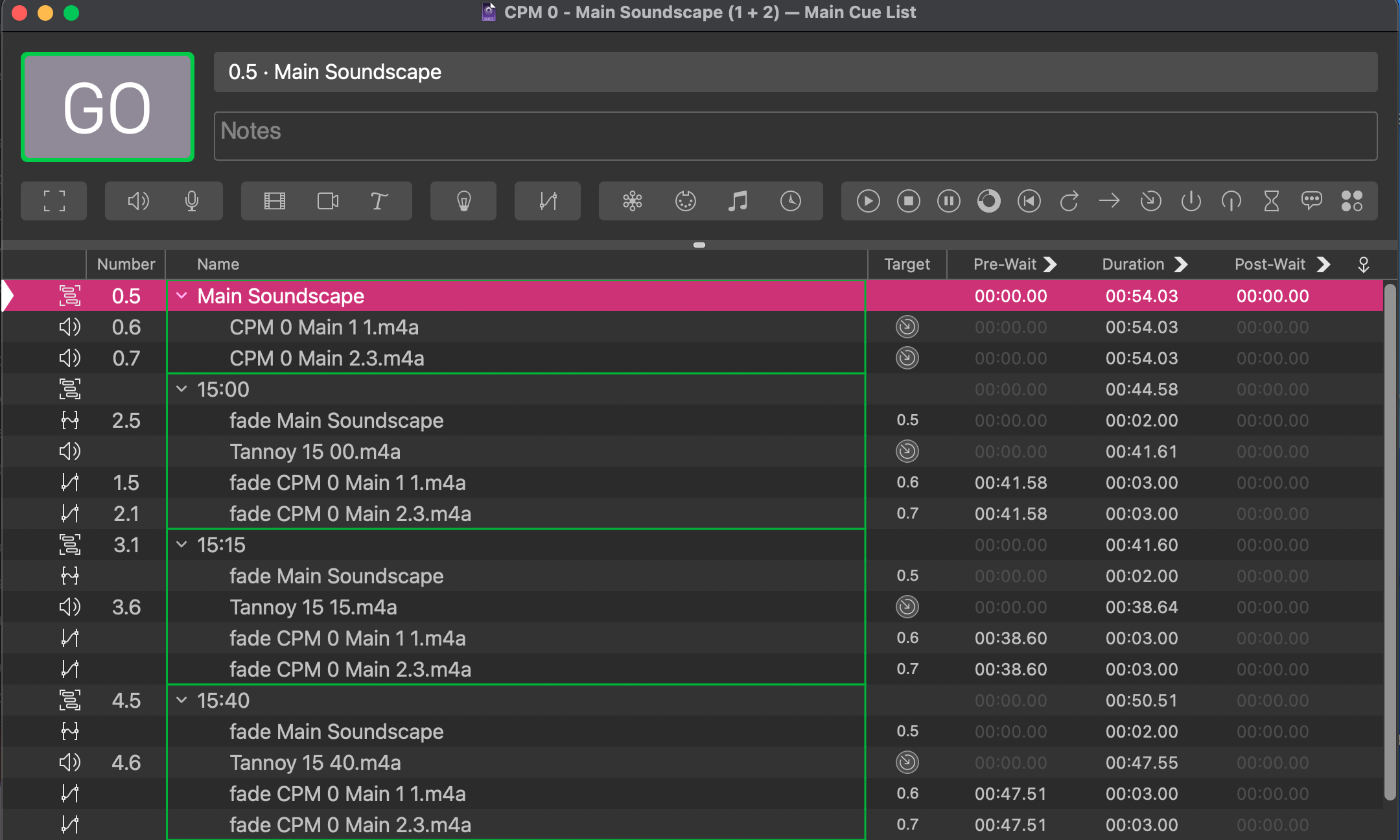
Both the humming and the resonating lines were looped and grouped into three (3), which depended on which speaker I wanted them played from. While arranging the notes I’d received into chords, I found it easiest to create a dissonant (clashing) chord, and then resolve it into a major chord using other samples, and have this loop. This results in the alternating pattern you can see with some of the samples. The lines were then grouped and levelled based on what fit mixing-wise with the hums in each group.
The Video Station sound design used the same sampling basis, but in a more linear, sporadic fashion. I layered sections of each ramble linearly, depending on which pieces fit together thematically the most. I then layered an old composition of mine underneath, as my memory contribution, and Krystal offered some ambient noise, which I also layered in.
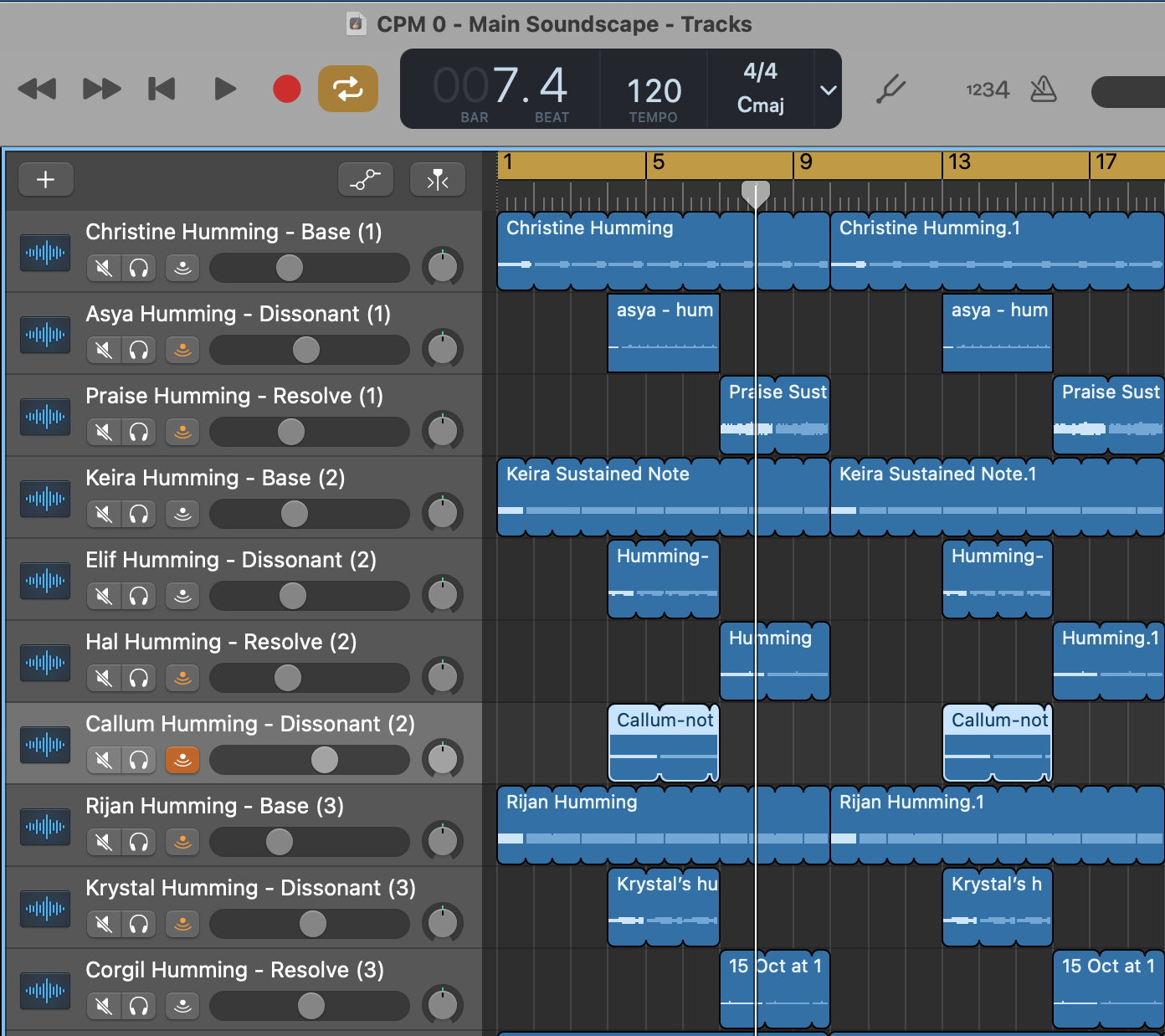
QLab:
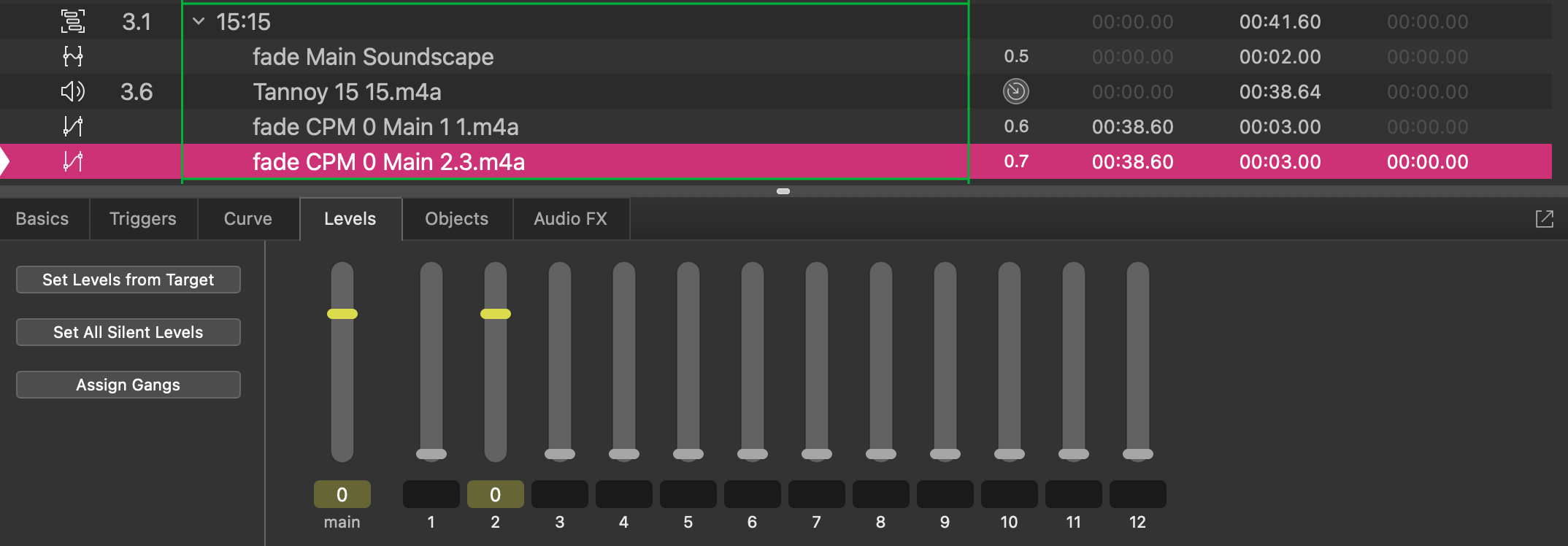
Due to limited resources at the time and the fact that I wanted manual control over each individual speaker, I had to operate via two laptops. One held this QLab, for Speakers One (1) and Two (2) on the diagram, and the other held a QLab that looked very similar to this one, for Speaker Three (3).
The ‘Main Soundscape’ group at the top establishes what plays out of each speaker. At every point where a tannoy line is scheduled, they will both fade, the tannoy will play over all speakers, and then the soundscape will start up again, isolated to their speakers once more.
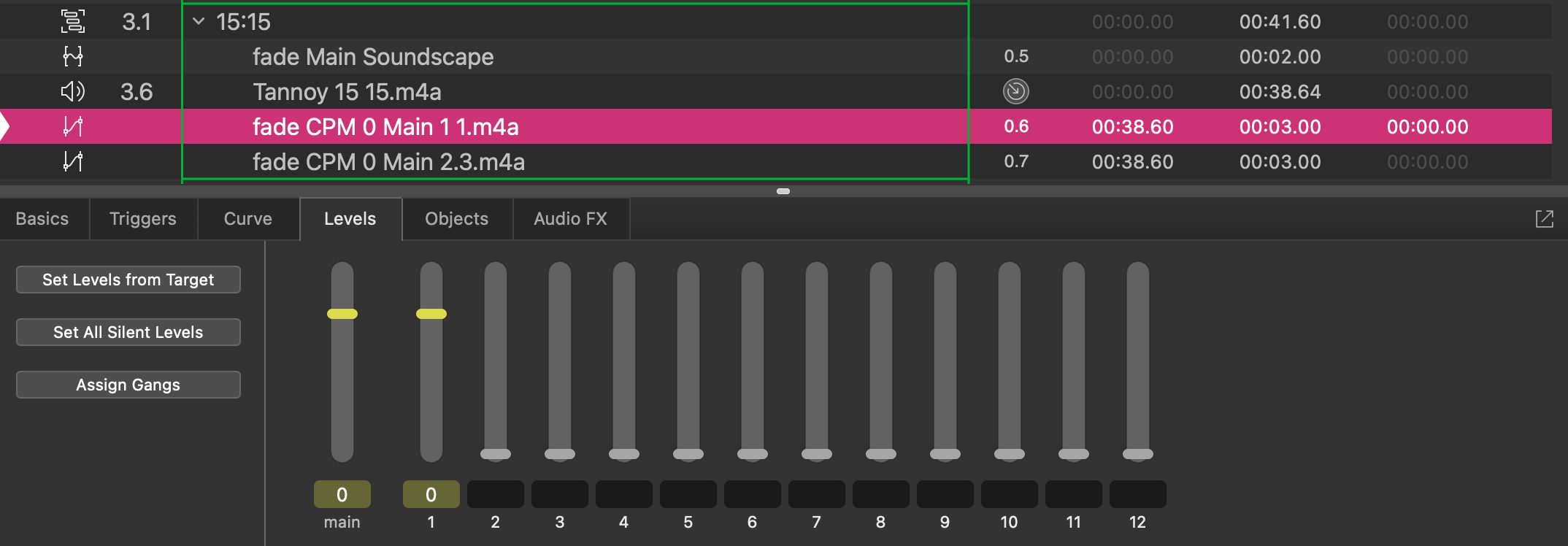
Here, you can see how I assign sections of the soundscape to each speaker. Channel One (1) is Speaker One (1), and vice versa.
The Final Product
AUDIO SAMPLES
Here is the culmination of my work with the hums and resonating lines. I’ve panned them in such a way that it would somewhat resemble what it was like to be in the room with sound coming from 3 different directions, but the effect in the actual installation was obviously a little different.
These are the first tannoy lines played during the installation. They are EQ’d in a very… extreme manner, in order to achieve the distortion I wanted. Beware while listening!
This is the full piece I sent to the Video Team. They only used a section of it, but it’s nice to have the full thing on record. I also ended up putting a static filter over the sound for the whole video, and EQ-ing so that the piece sounded tinny, as if coming from the speakers of an older TV monitor.
PHOTO GALLERY
Photo Credit: Allissa Flood